
Freedom from the skull
Prānāyāma is usually translated as breath control, but that sells it short. Āyāma means extension, a stretching out. Prānāyāma is the expansion of the life force, the practice of growing the breath long and the person large. Within prānāyāma exists the pinnacle, kumbhaka, signifying non-breath, suspension, and it is synonymous with samādhi.
Yoga is samādhi
Free flowing access with no differentiation. Not between inside or outside, nor here or there, nor coming or going. To live this state we must become free of the skull and all it implies.
The skull implies incessant linearity, billions of small incremental moments, a state of microscopic limitation subject to a supposed external world.
The state of yoga is when a human being lives as the expanded body, larger in all directions. The yogi identifies as their vast and rarified subtle bodies.
Not all breathwork is the same
Yoga prescribes a more progressive sustained path that tends to be embedded extremely well, permanently, in the entity.
There are others though, more modern and varied, that take a looser line and rarely call for the same martial arts style of long term discipline. In classical yoga, prānāyāma was often forbidden for those with less than ten years of daily practice.
Toothless tigers
Without āsana and prānāyāma, meditation is a toothless tiger. Yes, it does give some relief from stress, suffering and excessive attachment, but this is akin to reducing posture to its health benefits.
Gregor Maehle, Pranayama
Patañjali and yogis in general say the path is not to become “one with everything,” but to abide in consciousness, aware of everything, yet knowing itself to be different.
Laying down kind of encourages prakrti-laya, the absorption into nothingness, and that’s not really what we want.
Altered states
Much modern breathwork is a form of prolonged mouth-breathing while lying down, and this kind of sustained hyperventilation, often lasting 20 to 60 minutes, is reported to bring on altered states of consciousness.
Some of these methods resemble bhastrikā, though where they call for long sessions of intense open-mouth breathing, classical yoga prescribes bhastrikā in short bursts of a few minutes, followed by kumbhaka, breath retention.
These are strong states, and their effects can be hard to predict, which is why classical yoga approaches them gradually and with care.
Such is ripening practice of the three-fold bandha, devoid of inhale and exhale, burning the flow of mental constructs. I honour the spontaneous suspension, marked by revelatory flashes, called kevala kumbhaka.
Yoga Tārāvalī 8
This is the pivot of prānāyāma
The axial yogic limb
Prāna becomes the rein that holds the horses and the chariot. If you don’t have the prānāyāma and want to go directly, then you have to carry the chariot and all the horses with you.David Frawley, relaying Yogananda’s image
Sit up straight and be Śiva
Kevala kumbhaka is the goal of prānāyāma. It is a spontaneous suspension of prāna, which accompanies or invokes samādhi.Gregor Maehle, Pranayama
Prāna and apāna, nāda and bindu
Perfected speech, movement at will, far sight and far hearing, subtle sight, entry into other bodies, converting the mundane to precious, the power to vanish from view, and travel through the open sky, all these arise for the yogi.Śiva Saṃhitā 3.54
Scope of practice
A registered teacher introduces prānāyāma gradually, ideally in person. The student practises, the breath lengthens over months, retention builds over years, and the teacher watches for the energetic biases described below as the student develops. Prolonged hyperventilation protocols, breathwork offered as therapy, and any claim to treat a condition ought to be avoided unless the teacher has suitable expertise. The teacher’s craft is the drip feed and the bestowing of empowerment, so that when the adept reaches the threshold and must blast through, they are conditioned for the crossing.
Contraindications
Patañjali and Svātmārāma, among others, note preconditions for commencing prānāyāma. Patañjali sets the seat first, steady and comfortable, the effort in holding it fallen away.
Svātmārāma is similarly explicit three centuries or more later. Athāsane drdhe, the posture now being firm. Then he adds three further conditions before a single breath is drawn.
Yogic breathwork increases energy, and that means your energetic biases are exaggerated. If you have a solar or lunar imbalance, for example, you may become much more so, see the stories of Gregor and Gopi Krishna below. So without proper preparation and gradual increase, there is a risk of your impediments, such as impatience, flightiness or lethargy, increasing in a manner that can cause harm or inconvenience.
Gregor went into an 18 month depression, while another notable figure, Gopi Krishna, had the opposite experience. He experienced hardcore kundalinī awakening, but his disposition being more solar, he endured heat and illness for a couple of years. He tells stories of his wife being full time occupied with trying to cool him down with wet towels. This is the same premature inflation of energy illustrated in opposite temperaments. So traditionally, this practice is only offered to well-prepared students under the guidance of an experienced teacher.
Once that is accomplished, the cutting off of the movement of inhalation and exhalation is prānāyāma.
Yogasūtra 2.49
The posture now being firm, the yogī self-restrained and eating beneficial and moderate food, should practise the prānāyāmas by the path taught by the guru.
Hatha Yoga Pradīpikā 2.1
We were instructed to lie down and breathe very deeply up into the chest, a process that was to be continued for over an hour. Soon after I began, some very powerful sensations took over and I began screaming, convulsing, beating and kicking. On that afternoon I entered a depression that was to last for 18 months.
Gregor Maehle, Pranayama
Traditional prānāyāma is such a beautiful practice, so velvety and deep, it can do such wonderful things, such a nurturing practice. This other thing I see on social media, people writhing on the floor. I don’t know, it seems like tough love.
A Senior Member of Yoga Australia
CPD resources
New CPD short course
From Breath to Samādhi
A path from personal conduct through breath to the eight limbs of rāja yoga and samādhi. Genuine prānāyāma, extended inhalation, exhalation and retention, distinguished from simpler calming techniques and taught once a strong foundation exists.
Summit
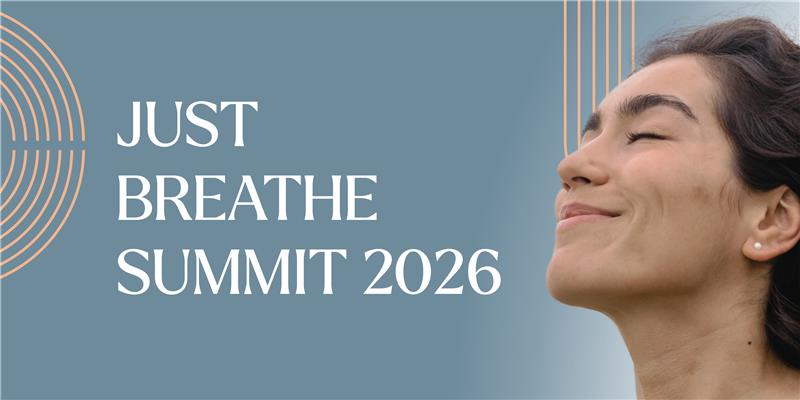
Just Breathe Summit
This landmark event brings together leading voices in breathing practices, from traditional prānāyāma to clinical breath education and research. We aim to explore the therapeutic wisdom of classical prānāyāma while addressing the benefits and challenges of modern breathwork trends.

Article
Blowing the Lid off Breathwork
In this article Josh explores yoga, prānāyāma, and the modern trend of breathwork, and the way the rise of hyperventilation-based breathwork raises questions of safety, scope, and informed consent.

CPD short course
Pranayama Fundamentals
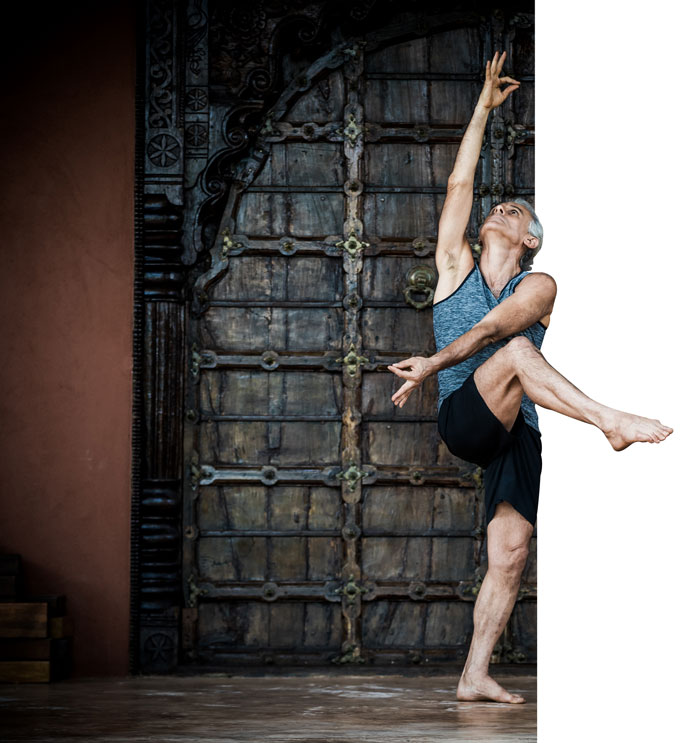
Bhastrikā is extraordinarily effective when introduced responsibly, it demands deep respect, proper training, and a well-prepared practitioner to harness its power safely.
CPD short course
Nervous System Health
Wringing out the system, wringing out the nervous system, wringing out the bones and the joints, wringing out the lungs. The methods of classical yoga are well proven, gradual and steady yet ever evolving and experimenting.
CPD short course
Mastery of Internal Energy
Come to the expanded energy before the behavioural and physical groundwork is in, and the energy simply amplifies whatever you already carry. Yoga at its best is avant garde, it is the irrepressible experimental science.
CPD short course
Trauma-Informed Intake, Consent and Referral
The haṭha texts teach that breath practice strengthens when rightly applied and harms when misapplied. Ethical practice requires teachers to recognise both the scope and the limits of their professional competence.
Prānāyāma · Specialisation Standard
Yoga Australia
Level 1 minimum
This standard permits teachers to teach prānāyāma as a graded practice paced to the individual student.
Indicative training of 100 hours, procedural capabilities taught in person. Provisional members may train and be assessed, and their competencies bank toward future upgrades. Badge and directory listing awarded only when teachers reach Level 1 or beyond.
Scope
The scope of this standard is teaching breath regulation as a sustained developmental practice, introduced by degrees and adjusted to the individual. The techniques come from the classical corpus and its lineages.
This standard covers teaching breathing practice to healthy students. It excludes treating illness with breath and hyperventilation-style breathwork.
Conceptual
C3 · Describe yogic breath systems
Curriculum Competency 3 · Yoga Foundations, Level 1 (Override)
Describe prāna as the tradition presents it. Describe the coupling of breath, energy, and mind and the purpose of breath regulation. Draw on the classical corpus, the wider tradition first, and name the source.
Procedural
C5 · Teach graded breath practice
Curriculum Competency 5 · Teaching Methodology, Level 1 (Override)
Assess students’ readiness, establish a steady and comfortable base for practice, and lead a course of instruction that builds capacity by degrees. Observe breath and effort directly, and adjust the session.
C6 · Progress practice safely
Curriculum Competency 6 · Techniques and Practices, Level 1 (Override)
Sequence practice safely across a course of instruction, pace introduction to students’ demonstrated capacity, and record what was introduced and when. Recognise strain, agitation, and over-reaching. Reduce the load and revise the plan.
Professional
C10 · Work within scope and refer
Curriculum Competency 10 · Scope of Practice, Level 1 (Inherit)
Recognise the boundary between developmental breath practice and clinical treatment, and refer students past it to medical or mental health practitioners.
C11 · Sustain a personal practice
Curriculum Competency 11 · Personal Practice, Level 1 (Inherit)
Maintain a regular personal breath practice and reflect on it with a peer.
Extensions
Recognise energetic bias and its exaggeration
Added by this standard (Extend)
Identify students’ existing dispositions toward heat or heaviness, agitation or lethargy, and anticipate that breath practice amplifies what is present. Adjust the practice to counterweight the bias, and withdraw it when amplification begins.
Distinguish classical practice from modern breathwork
Added by this standard (Extend)
Describe the difference between graded classical practice and sustained hyperventilation methods, with the effects and risks of each, and give students what they need to consent.
Contraindications and safety
The hatha texts teach that breath practice strengthens when rightly applied and harms when misapplied.
Recognise a presentation that calls for a practice to be withheld or modified, know which practices are affected, act on it, and refer past scope.
Recognise an adverse response during or after practice in mood, energy, or behaviour. Stop the practice and refer.
Assessment
Yoga Australia staff assess according to this standard. A short quiz covers breath systems, safe progression, contraindications, and scope. Documentary evidence comprises training records, practice history, and a statement of personal practice. Staff review the whole application and may request a conversation. Applicants who have the capability apply directly for assessment, and the rest complete training to this standard.
As birds are caught with nets, so by holding the breath, the mind is restrained and absorbed. This (breath-regulation) is a device for effecting absorption. For mind and life-breath (prāna), expressed in thought and action, diverge and branch out, but they spring from a single root.
Ramana Maharshi, Upadeśa Sāram 11 and 12
Prānāyāma Teacher Badge
Applications are open to Yoga Australia members.
Log in to apply, or become a member.
