Jarring Things

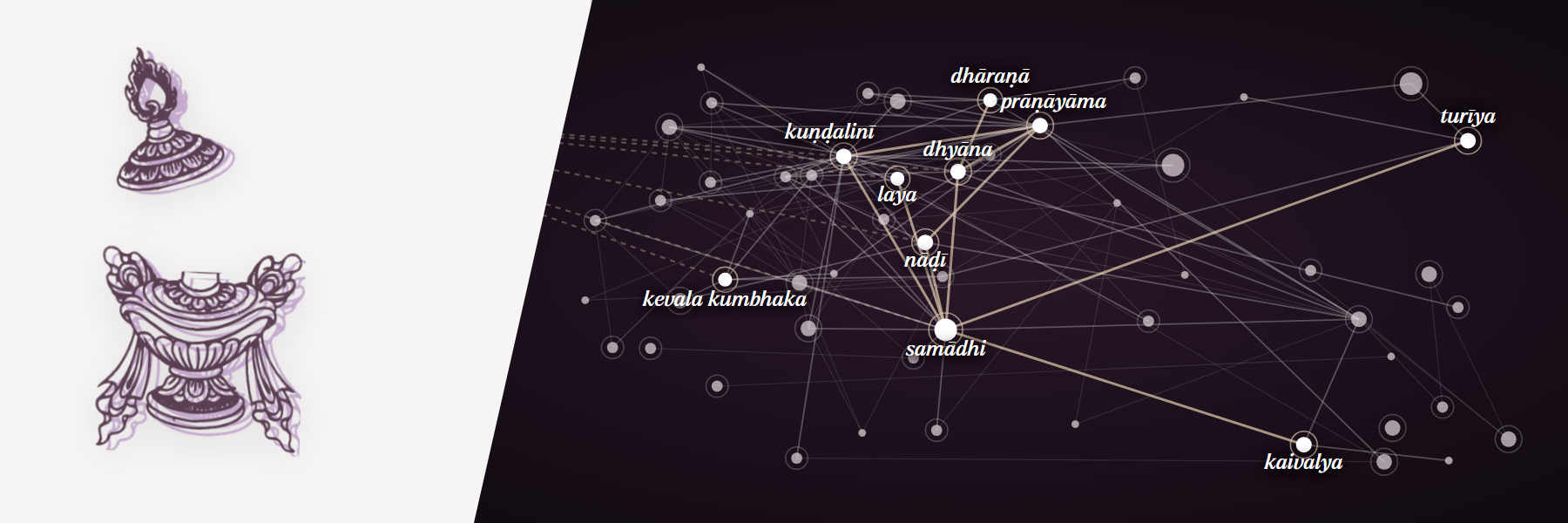
The road is less travelled for good reason
Yesterday I was chatting to someone about how taking a holiday from work can almost be traumatic. For some people at least, especially if that person is a high achiever or for any other reason they are enjoying the distraction that the workplace offers. Being pulled away from that can be quite calamitous.1Physical symptoms that arrive at weekends or on holiday, headache, fatigue, muscle pain and nausea, were recognised by about 3% of a representative Dutch sample, and cases differed from controls on workload, sense of responsibility and inability to relax (Vingerhoets, Van Huijgevoort & Van Heck 2002). People go through withdrawal and disorientation as the homeostasis of a busy life is dislodged.2Retirees who identify strongly with their work role are the more likely to lose wellbeing on leaving it, and adjusting to the loss of that role is named as a task of the transition (Wang & Shi 2014; van Solinge & Henkens 2008).
And yet, funnily enough, yoga and spirituality seek to provoke this change more often, to place the power of schisms in the hands of the individual so that they may get on board with it and willingly participate.3In the Kaṭha Upaniṣad, “The wise man chooses the better, indeed, rather than the pleasanter” (Kaṭha 2.2, trans. Hume 1921).
You see, at times people find themselves unsatisfied by normal circumstances.4Materialist values correlated with lower wellbeing at r = −.19 across 259 samples, with poor satisfaction of psychological needs the likely link (Dittmar et al. 2014). Many cultures seem to encourage fixation on material concerns and a lifestyle centred around sensory inputs and sensory outputs. Monologues, dialogues,5Random sampling of waking moments found inner speech in 26% of them, inner seeing in 34%, and wordless, imageless thinking in 22% (Heavey & Hurlburt 2008). consumption, pushing aside daydreams and flights of fancy deemed only suitable for children.
I mean, there are many good things in the sensory package. Perhaps it’s all good things. The simple joys of looking for new adventures, tending to your family, nice times with friends, being productive at work, transforming culture. But when those tangible circumstances feel too serious or banal and the operating mode of life feels restrictive, well, it sounds weird, but you have to die. Literally at times. Or perhaps by waiting out the remaining years, dulling the senses with alcohol, television.6Watching more than two and a half hours of television a day went with lower life satisfaction and higher material aspirations across 42,021 respondents in 22 European countries (Frey, Benesch & Stutzer 2007). Or by the culturally sanctioned act of throwing yourself at your vocation or cultivating obsessions down in the garage.
But another thing you can do, and it’s often framed in the ancient scriptures as a kind of death,7In the Kaṭha Upaniṣad the teaching on the inward turn is given by Death himself, Yama, to the boy Naciketas, and the outward life is “the net of widespread death” (Kaṭha 4.1–4.2, trans. Hume 1921). is close your eyes more often while you are awake. With practice and with the requisite instruction and world view installed, you become less fixated on the material world and increasingly direct attention toward the non-sensory dreamscape that we are all living all the time. We’re talking about tiny adjustments here, going from 0% to 0.1%.8In Killingsworth and Gilbert’s sample the rarest activity, “praying/worshipping/meditating”, took 0.1% of moments (2010, Fig. 1). Ludicrously small adjustments for the typical person that nonetheless make extraordinary changes in day-to-day living.9Four 20-minute sessions of breath-focused training, 80 minutes in all, raised mindfulness scores and lowered fatigue in novices against an active control (Zeidan et al. 2010).
A wonderful word, imagination, captures this practice so well.10Imagery meditation is measurable. After 20 minutes of Tibetan Deity Yoga, practitioners’ visuospatial processing rose sharply, as a temporary state (Kozhevnikov et al. 2009). Meditation is another that often fits the bill. But it really means anything that involves closing the doors of the senses, stopping the sentences in the brain; senses and sentences.11The same study sets Deity Yoga beside Open Presence, whose practitioner uses no imagery at all (Kozhevnikov et al. 2009). The nearest psychology comes to a non-sensory register is the unsymbolised thinking of Heavey and Hurlburt (2008).
And an unravelling occurs when people do this.12Interviewed three months after an eight-week mindfulness course, 83% of 96 participants reported at least one meditation-related effect (Britton et al. 2021). In a course for the general public, about two-thirds reported unpleasant experiences linked to practice (Baer et al. 2021). Sometimes it is enough to scare them and provoke a flight back to the normal world or to a mild version of spirituality like secular mindfulness.13Kabat-Zinn says the secular framing was chosen so the program would avoid “being seen as Buddhist” (Kabat-Zinn 2011); Purser’s McMindfulness argues the result is a diluted technique (Purser 2019). But the full path, the path to completeness, is sometimes jarring.14In a representative sample of 886 US meditators, 96.6% reported an unusual experience, 58.4% at least one adverse effect, and 9.1% functional impairment (Van Dam et al. 2025). Perhaps it needs to be so.15The research instrument asks whether each experience had a positive, negative, or no impact, because one person may take crying or traumatic re-experiencing as destabilising and another “as part of healing” (Britton et al. 2021). Rarely is it perfectly smooth and linear all the way. There are stops and starts as those clusters of neuroses, those habits of mental activity known as saṃskāras, break apart.16Varieties of Contemplative Experience study found 59 categories of meditation-related experience across seven domains, from very positive to very negative and from transient to enduring (Lindahl et al. 2017). It’s similar as with the physical body in your flexibility practices when you need to break open a joint in the skeleton that’s become stuck. Well, it needs a bit of effort to unstick and sometimes it even feels a bit like an injury. This is where teachers are helpful, people who have done it before, elders, sometimes even health professionals. In the traditions from which they came, these practices required stable and years-long behavioural and physical training, even the presumption of good genetics and a naturally sound ethical state of mind before even starting on such an intense practice.17Roots of Yoga gathers the texts’ conditions on the practitioner, place, diet and guru, and their warning that wrong practice brings disease and death (Mallinson & Singleton 2017).
Gheraṇḍa Saṃhitā 5, selected verses
“Four things are necessary in practising prānāyāma. First, a good place; second, a suitable time; third, moderate food; and, lastly, the purifications of the nādīs.”
ādau sthānam tathā kālam mitāhāram tathāparam
nādīśuddhim tatah paścāt prānāyāmam ca sādhayet
“The practice of Yoga should not be attempted in a far off country (from home), nor in a forest, nor in a capital city, nor in the midst of a crowd. If one does so, he loses success.”
dūradeśe tathāranye rājadhānyām janāntike
yogārambham na kurvīta krtaś cet siddhihā bhavet
“The practice of Yoga should not be commenced in these four seasons out of six:—hemanta (winter), śiśira (cold), grīsma (hot), varsā (rainy). If one begins in these seasons, one will contract diseases.”
hemante śiśire grīsme varsāyām ca rtau tathā
yogārambham na kurvīta krte yogo hi rogadah
“The practice of Yoga should be commenced by a beginner in spring (vasanta) and autumn (śarat). By so doing, he attains success, and verily he does not become liable to diseases.”
vasante śaradi proktam yogārambham samācaret
tadā yogo bhavet siddho rogān mukto bhaved dhruvam
“He who practises Yoga without moderation of diet incurs various diseases, and obtains no success.”
mitāhāram vinā yas tu yogārambham tu kārayet
nānārogo bhavet tasya kimcid yogo na sidhyati
“Half the stomach should be filled with food, one quarter with water, and one quarter should be kept empty for practising prānāyāma.”
annena pūrayed ardham toyena tu trtīyakam
udarasya turīyāmśam samraksed vāyucārane
“In the beginning of Yoga-practice one should discard bitter, acid, salt, pungent and roasted things, curd, whey, heavy vegetables, wine, palm-nuts, and over-ripe jack-fruit.”
katv amlam lavanam tiktam bhrstam ca dadhi takrakam
śākotkatam tathā madyam tālam ca panasam tathā
“Regulating his life in this way, let him practise prānāyāma. In the beginning, before commencing it, he should take a little milk and ghee daily, and take his food twice daily, once at noon and once in the evening.”
evamvidhividhānena prānāyāmam samācaret
ārambhe prathame kuryāt ksīrādyam nityabhojanam
madhyāhne caiva sāyāhne bhojanadvayam ācaret
“By these three prānāyāmas the nādīs are purified. Then, established firmly in a posture, let him begin regular prānāyāma.”
evamvidhām nādīśuddhim krtvā nādīm viśodhayet
drdho bhūtvāsanam krtvā prānāyāmam samācaret
“The kumbhakas or retentions of breath are of eight sorts: Sahita, Sūryabheda, Ujjāyī, Śītalī, Bhastrikā, Bhrāmarī, Mūrcchā and Kevalī.”
sahitah sūryabhedaś ca ujjāyī śītalī tathā
bhastrikā bhrāmarī mūrcchā kevalī cāsta kumbhikāh
Sanskrit: GRETIL transcription of Thomi’s 1993 edition. English: Vasu, 1914–15.
I’m listening now to the ABC All in the Mind episode that talks about adverse effects of meditation.18A two-part special, When meditation goes wrong, on ABC Radio National’s All in the Mind, presented by Sana Qadar with reporter Fiona Pepper, 28 August and 4 September 2026, and an ABC News article of 6 September (Qadar & Pepper 2026a, 2026b; Pepper 2026). It strikes me like a magazine. It presents an alarming headline, a bit of a sound bite. A promise to come back to that later. A different person’s tale, more thought fragments. Not much of a meditation, to be honest. But news outlets make content packages like this.
Anyway, they say that half of all meditators have had an adverse effect. The survey they referred to asked 434 people whether they have ever had any of eleven things happen as a result of meditation.19The survey put eleven items to 434 US adults under the stem “Have you ever had any of the following occur as a result of meditation?”. Endorsement of at least one was 50.0%, effects lasting a month or more 10.4%, some functional impairment 10.6%, impairment lasting a month or more 1.2%, and those reporting adverse effects were as glad to have practised as everyone else, about 88% in each group (Goldberg et al. 2022). Things like “I felt anxious” or “I felt distant”. If you say yes to any one of those, for any duration memorable ever, then you are in that half of people suffering from meditation. Days to a week was the most common period of lingering after-effect, plummeting to 1.2% for people who still felt impaired after a month. And even though it’s reported as adverse, 88% of people are still glad that they had practised. Confusing?20Whether an experience counts as adverse depends on how it is asked. A review of 83 studies found adverse events in 8.3% of participants overall, 3.7% in experimental and 33.2% in observational studies (Farias et al. 2020). In two trials from Goldberg’s own group, distressed adults reported such experiences at the same rate whether or not they completed the guided meditations (Beloborodova et al. 2026). Painting it as the dark side, as The Atlantic did, is a little salacious.21The phrase headed The Atlantic’s piece on Britton’s work, “The Dark Side of Mindfulness” (Khazan 2026).
Modern medicine tends to tally tremors, energetic surges, and temporary dissociations as adverse events because it presupposes that Western lifestyle norms are favourable for the human being: forty hours a week for forty years, high-density living, and the promise of universal oversight and gradual reduction in suffering. When meditation fractures identity and dislodges attachment to the workplace or social units, psychiatric surveys often score that disorientation as an adverse effect.22The current clinical review puts functional impairment at 3 to 37% of those who meditate, and adds: “It remains unclear to what extent AEs reflect transitory discomfort vs. lasting harm” (Matko & Van Dam 2026). On the ABC, Britton describes impairment where “some people were hospitalised, some people became suicidal, many people had to take time off work, or were fired or had to take time off school” (Pepper 2026). Interviewed after an eight-week course, 30 of 81 participants assessed (37%) were counted as having an effect with a negative impact on functioning, with work first among the domains the interview names (Britton et al. 2021). The standing critique of definitions built on distress and disability is Wakefield’s: they cannot tell a dysfunction from a valued response (Wakefield 1992). Economic homeostasis is not to be threatened.
Indian texts talk about the physical identity structure, that ego, being similar to a jar, a small pot in the much vaster ocean of self, bound by the walls of the vessel, thick or thin as they may be.23The figure is Gauḍapāda’s, on the Māṇḍūkya: the self is like space, the embodied selves like space enclosed in pots, and when the pot breaks the space within merges with the whole (Māṇḍūkya Kārikā 3.3–3.7, trans. Nikhilananda 1949). And there’s a lid on the spout, of course. The point of spirituality is to rattle and open the lid,24The tradition names the loosening of the self as the aim, and the research records that it hurts. In a sample recruited for meditation-related challenges, 55% of those reporting changes in sense of self reported distress and 45% impairment (Lindahl & Britton 2019). expose that brain, that sentence-making distraction factory that we so easily identify with, to the vast consciousness that would nourish and envelop it instantly.
We do this through meditation: concentrated, alert daydream, focused, positive direction of attention. Spirituality itself is really just positive thinking, to stretch and encompass other points of view, to empathise and entertain ideas beyond those you currently possess.25Perspective-taking reduced stereotyping and increased the overlap between people’s representations of themselves and of the other group (Galinsky & Moskowitz 2000). It is yoga, it is union, whereas negative thinking is narrowing, separating, fixating,26Worry and rumination, taken together as repetitive negative thinking, appear across disorders and help maintain them whatever their content (Ehring & Watkins 2008; Moulds & McEvoy 2025), and went with unpleasant meditation experiences in 1,370 regular meditators (Pauly et al. 2022). until you become so bored that you wish for something completely different.
Indeed, we must remember that even the very notion of positive thinking can be turned into a negative. And it has been by various circuses over the years, coining the phrase toxic positivity. Surely not everything can be positive. Surely there is some demon out there, some bad person, some objective badness, some justifiable cause to gossip and gripe and feel hard done by. That is the environment that popularises the idea that fear is necessary. Fear is some sort of responsible behaviour.27In the Bṛhadāraṇyaka Upaniṣad, “Assuredly it is from a second that fear arises” (Bṛhadāraṇyaka 1.4.2, trans. Hume 1921). Asked why they worry, college students rated motivation, preparation for the worst, and the avoidance or prevention of negative outcomes as the most typical reasons (Borkovec & Roemer 1995).
There will always be seemingly good reasons to stay stuck, complacent, and anxious. There will always be invitations to assert or accept victimhood, to hand over your agency and cash to someone who’s offering a way out, an escape, an excuse to not empathise, to not push yourself to recognise that what you currently believe is just one of many perfectly valid, equally valuable, and seemingly contradictory beliefs.28The Ṛgveda says: “To what is One, sages give many a title” (Ṛgveda 1.164.46, trans. Griffith 1896).
It is in this landscape that Yoga Australia exercises its positive duty29Yoga Australia’s positive duty is set out as strengthening popular practice and protecting it “against reduction to mere exercise or symptom relief” (Pryor 2026). to highlight how wonderful meditation is and how fortunate we are to have these long-developed, well-honed Indic practices, replete with thorough preparatory conditions,30The one experiment located that separates the parts randomised healthy novices to mantra meditation alone, with postural yoga, with weekly teaching on the yama and niyama, or all three. Ethical teaching raised wellbeing most and made meditation feel easier, and meditation alone had the least favourable effect on daily mood (Matko, Sedlmeier & Bringmann 2021, 2022). warnings,31The Haṭha Yoga Pradīpikā has the breath tamed by slow degrees, as a lion, an elephant or a tiger is tamed, or it kills the practitioner, and lists hiccups, asthma, cough and pain in the head, ears and eyes among the diseases of breath wrongly worked (Haṭhayogapradīpikā 2.15–2.17, GRETIL text). Retreat participation went with adverse effects in a representative sample (Van Dam et al. 2025). and most importantly, the cosmological world view necessary for lasting success. That world view is called many things, non-duality among them. This is the stuff that humanity has been circling for thousands of years, including right now in our most esteemed Western institutions, the priesthood of the West, theoretical physics, also finding it impossible to shirk the reality of many worlds, the multiverse, parallel realities.32Many worlds enters physics with Everett’s relative-state formulation (Everett 1957), and the four-level multiverse is Tegmark’s (2003).
Fundamentally, yoga has long said, you start with awareness of the teaching that all things are true, that all people are coexistent in the past, present, future, and sideways.33The Māṇḍūkya Upaniṣad says: “The past, the present, the future — everything is just the word Om. And whatever else that transcends threefold time — that, too, is just the word Om” (Māṇḍūkya 1, trans. Hume 1921). The eternal “I am”.34In the Bṛhadāraṇyaka the world begins as ātman alone, who looks around, sees nothing else than himself, and says first: “I am” (Bṛhadāraṇyaka 1.4.1, trans. Hume 1921). All of this exists in the same one large moment, one pregnant singularity. You and I are shards, sparks,35The Bṛhadāraṇyaka has the image: “as small sparks come forth from the fire”, so from ātman come all vital energies, all worlds, all gods, and all beings (Bṛhadāraṇyaka 2.1.20, trans. Hume 1921). choosing to enter lives of relative linearity for what it has to offer. The experience of novelty, first times, variety in the form of workplaces, holidays, love affairs, and the eventual universal hug of letting go of rigid points of view. The dawning clarity, fleeting at first but gradually enduring. The awareness that I am you and you are me, and what I do to you, I do to myself.
As you increase your positive behaviours, you naturally embrace the obviousness of healthy activities like stretching, jumping, breathing deeply, closing your eyes and resting in the middle of the day, letting grudges fall, permitting artists to create, honouring the elderly, honouring the poor, the young, the disabled, and assuming the very best of every person in every moment,36The Īśā Upaniṣad says that whoever looks on all beings as in the Self, and on the Self as in all beings, “does not shrink away” (Īśā 6, trans. Hume 1921). Kindness toward oneself tracks mental health closely, self-compassion correlating with psychopathology at r = −0.54 across 20 samples (MacBeth & Gumley 2012). seeing them as alive, perfect, well-lived, capable, and deserving of infinite gratuity. This is health from the yogic point of view.
Yoga would have us know this, that we are all well and truly headed towards something far greater than the promise of material security,37In the Bṛhadāraṇyaka, Yājñavalkya tells Maitreyī: “Of immortality, however, there is no hope through wealth” (Bṛhadāraṇyaka 2.4.2, trans. Hume 1921). safely wrapped inside a familiar jar with a hole poked in the lid. No, folks. We are opening that jar and giving it a tap on the side of the kitchen bench if necessary, so that we may live in a multitude of modes, simultaneously, as it has been foretold.38In the Chāndogya Upaniṣad the seer “sees only the All”, and the verse continues: “is onefold, is threefold, fivefold, sevenfold, and also ninefold” (Chāndogya 7.26.2, trans. Hume 1921).
Śiva Saṃhitā 5.14
Great in vigour, and zealous with it; of pleasing presence, and brave besides. Learned in the śāstras, settled in practice, free of delusion, unperturbed.
mahāvīryānvitotsāhī manojñah śauryavān api
śāstrajño ‘bhyāsaśīlaś ca nirmohaś ca nirākulah
In fresh youth, measured in food, his senses mastered. Fearless, clean, capable, open-handed, a refuge to everyone.
navayauvanasampanno mitāhārī jitendriyah
nirbhayaś ca śucir dakso dātā sarvajanāśrayah
Fit for the work, steady, intelligent, abiding as he chooses, forbearing. Of good conduct, walking in dharma, quiet about what he does, gentle in speech.
adhikārī sthiro dhīmān yathecchāvasthitah ksamī
suśīlo dharmacārī ca guptacestah priyamvadah
Trusting the śāstras, worshipping the deity and the guru. Unattached to company, and free of serious illness.
śāstraviśvāsasampanno devatāgurupūjakah
janasangaviraktaś ca mahāvyādhivivarjitah
Knowing the observances of the adhimātra, and a practitioner of every yoga — the attainment is his within three years, and of this there is no doubt.
adhimātravratajñaś ca sarvayogasya sādhakah
tribhih samvatsaraih siddhir etasya nātra samśayah
He is fit for every yoga. Let there be no hesitation.
sarvayogādhikārī sa nātra kāryā vicāranā
Sanskrit: Muktabodha transcription at sanskritdocuments.org. English: this edition’s own.
The traditional context of practice, teacher and community, a sense of the difference between expansion and contraction, and behavioural guidelines baked into society, may mitigate the impact of what are being labelled adverse effects.39The current clinical review says the traditional context of practice differed from today’s, with ethical commitments, a personal teacher or community, and lifestyle requirements, and that “traditional contextual factors such as one-to-one instruction, community support, and expectations/understanding of likely experiences may mitigate the negative impact of meditation-related AEs” (Matko & Van Dam 2026). Perhaps we can offer a passage for yoga teachers summarising crucial information from the sacred texts:
“Yoga teaches that you are vast consciousness, that your body and brain are small and fleeting inside this broader self, and that knowing this is the source of all health. With this awareness you experience greater clarity, peace, and bliss. As the knowing dawns, you may feel unsettled or less interested in work, company, and a busy routine. The tradition expects this, and says it is usually replaced by greater purpose and agency. But Western norms often consider these effects adverse or impairment, and you may experience it that way too. This is the paradox of practice. Consider whether you are willing for your situation to shift before embarking on this path. If the changes worry either of us at any point, I may refer you to a GP or psychologist.”
Sources
- Baer, R., Crane, C., Montero-Marin, J., Phillips, A., Taylor, L., Tickell, A., Kuyken, W., & the MYRIAD team. (2021). Frequency of self-reported unpleasant events and harm in a mindfulness-based program in two general population samples. Mindfulness, 12(3), 763–774. https://doi.org/10.1007/s12671-020-01547-8
- Beloborodova, P., Smith, L. M., Riordan, K. M., Simonsson, O., Dottori, L. T., Song, H. Q., Shashko, N. S., Tatar, R., Baldwin, S. A., Bernstein, A., Dunne, J. D., Davidson, R. J., Hirshberg, M. J., & Goldberg, S. B. (2026). Prevalence and predictors of self-reported adverse experiences in digital meditation training: 2 randomized controlled trials. JMIR Mental Health, 13, e90602. https://doi.org/10.2196/90602
- Borkovec, T. D., & Roemer, L. (1995). Perceived functions of worry among generalized anxiety disorder subjects: Distraction from more emotionally distressing topics? Journal of Behavior Therapy and Experimental Psychiatry, 26(1), 25–30. https://doi.org/10.1016/0005-7916(94)00064-S
- Britton, W. B., Lindahl, J. R., Cooper, D. J., Canby, N. K., & Palitsky, R. (2021). Defining and measuring meditation-related adverse effects in mindfulness-based programs. Clinical Psychological Science, 9(6), 1185–1204. https://doi.org/10.1177/2167702621996340
- Dittmar, H., Bond, R., Hurst, M., & Kasser, T. (2014). The relationship between materialism and personal well-being: A meta-analysis. Journal of Personality and Social Psychology, 107(5), 879–924. https://doi.org/10.1037/a0037409
- Ehring, T., & Watkins, E. R. (2008). Repetitive negative thinking as a transdiagnostic process. International Journal of Cognitive Therapy, 1(3), 192–205. https://doi.org/10.1521/ijct.2008.1.3.192
- Everett, H. (1957). “Relative state” formulation of quantum mechanics. Reviews of Modern Physics, 29(3), 454–462. https://doi.org/10.1103/RevModPhys.29.454
- Farias, M., Maraldi, E., Wallenkampf, K. C., & Lucchetti, G. (2020). Adverse events in meditation practices and meditation-based therapies: A systematic review. Acta Psychiatrica Scandinavica, 142(5), 374–393. https://doi.org/10.1111/acps.13225
- Frey, B. S., Benesch, C., & Stutzer, A. (2007). Does watching TV make us happy? Journal of Economic Psychology, 28(3), 283–313. https://doi.org/10.1016/j.joep.2007.02.001
- Galinsky, A. D., & Moskowitz, G. B. (2000). Perspective-taking: Decreasing stereotype expression, stereotype accessibility, and in-group favoritism. Journal of Personality and Social Psychology, 78(4), 708–724. https://doi.org/10.1037/0022-3514.78.4.708
- Gauḍapāda. (1949). The Māṇḍūkyopaniṣad with Gauḍapāda’s Kārikā and Śaṅkara’s Commentary (Swami Nikhilananda, Trans.). Mysore: Sri Ramakrishna Ashrama.
- Gheraṇḍasaṃhitā. (2020). GRETIL plain-text transcription, data entry Peter Thomi, from Gherandasamhita: Sanskrit-deutsch, ed. P. Thomi, Wichtrach: Institut für Indologie, 1993. Göttingen Register of Electronic Texts in Indian Languages. http://gretil.sub.uni-goettingen.de/gretil/corpustei/sa_gheraNDasaMhitA.xml
- Goldberg, S. B., Lam, S. U., Britton, W. B., & Davidson, R. J. (2022). Prevalence of meditation-related adverse effects in a population-based sample in the United States. Psychotherapy Research, 32(3), 291–305. https://doi.org/10.1080/10503307.2021.1933646
- Griffith, R. T. H. (trans.). (1896). The Hymns of the Rigveda (Vol. 1). Benares: E. J. Lazarus and Co. https://www.sacred-texts.com/hin/rigveda/rv01164.htm
- Haṭhayogapradīpikā of Svātmārāma. GRETIL plain-text transcription. Göttingen Register of Electronic Texts in Indian Languages. https://gretil.sub.uni-goettingen.de/gretil/corpustei/transformations/plaintext/sa_svAtmArAma-haThayogapradIpikA.txt
- Heavey, C. L., & Hurlburt, R. T. (2008). The phenomena of inner experience. Consciousness and Cognition, 17(3), 798–810. https://doi.org/10.1016/j.concog.2007.12.006
- Hume, R. E. (trans.). (1921). The Thirteen Principal Upanishads, Translated from the Sanskrit. London: Oxford University Press.
- Kabat-Zinn, J. (2011). Some reflections on the origins of MBSR, skillful means, and the trouble with maps. Contemporary Buddhism, 12(1), 281–306. https://doi.org/10.1080/14639947.2011.564844
- Khazan, O. (2026, 4 September). The dark side of mindfulness. The Atlantic. https://www.theatlantic.com/ideas/2026/09/meditation-willoughby-britton-downsides/688474/
- Killingsworth, M. A., & Gilbert, D. T. (2010). A wandering mind is an unhappy mind. Science, 330(6006), 932. https://doi.org/10.1126/science.1192439
- Kozhevnikov, M., Louchakova, O., Josipovic, Z., & Motes, M. A. (2009). The enhancement of visuospatial processing efficiency through Buddhist Deity meditation. Psychological Science, 20(5), 645–653. https://doi.org/10.1111/j.1467-9280.2009.02345.x
- Lindahl, J. R., & Britton, W. B. (2019). ‘I have this feeling of not really being here’: Buddhist meditation and changes in sense of self. Journal of Consciousness Studies, 26(7–8), 157–183.
- Lindahl, J. R., Fisher, N. E., Cooper, D. J., Rosen, R. K., & Britton, W. B. (2017). The varieties of contemplative experience: A mixed-methods study of meditation-related challenges in Western Buddhists. PLOS ONE, 12(5), e0176239. https://doi.org/10.1371/journal.pone.0176239
- MacBeth, A., & Gumley, A. (2012). Exploring compassion: A meta-analysis of the association between self-compassion and psychopathology. Clinical Psychology Review, 32(6), 545–552. https://doi.org/10.1016/j.cpr.2012.06.003
- Mallinson, J., & Singleton, M. (2017). Roots of Yoga. London: Penguin Classics.
- Matko, K., Sedlmeier, P., & Bringmann, H. C. (2021). Differential effects of ethical education, physical Hatha yoga, and mantra meditation on well-being and stress in healthy participants: An experimental single-case study. Frontiers in Psychology, 12, 672301. https://doi.org/10.3389/fpsyg.2021.672301
- Matko, K., Sedlmeier, P., & Bringmann, H. C. (2022). Embodied cognition in meditation, yoga, and ethics: An experimental single-case study on the differential effects of four mind–body treatments. International Journal of Environmental Research and Public Health, 19(18), 11734. https://doi.org/10.3390/ijerph191811734
- Matko, K., & Van Dam, N. T. (2026). Beyond serenity: Adverse effects of meditation and mindfulness in clinical practice. Current Opinion in Psychology, 67, 102197. https://doi.org/10.1016/j.copsyc.2025.102197
- Moulds, M. L., & McEvoy, P. M. (2025). Repetitive negative thinking as a transdiagnostic cognitive process. Nature Reviews Psychology, 4(2), 127–141. https://doi.org/10.1038/s44159-024-00399-6
- Pauly, L., Bergmann, N., Hahne, I., Pux, S., Hahn, E., Ta, T. M. T., Rapp, M., & Böge, K. (2022). Prevalence, predictors and types of unpleasant and adverse effects of meditation in regular meditators: International cross-sectional study. BJPsych Open, 8(1), e11. https://doi.org/10.1192/bjo.2021.1066
- Pepper, F. (2026, 6 September). Meditation can help and it can harm. This is what happens when it goes wrong. ABC News. https://www.abc.net.au/news/health/2026-09-06/when-meditation-goes-wrong/106692856
- Pryor, J. (2026, 31 March). Voluntary registration and positive duty. Yoga Australia. https://yogaaustralia.org.au/voluntary-registration-and-positive-duty/
- Purser, R. E. (2019). McMindfulness: How Mindfulness Became the New Capitalist Spirituality. London: Repeater Books.
- Qadar, S., & Pepper, F. (2026a, 28 August). When meditation goes wrong: part one. All in the Mind, ABC Radio National. https://www.abc.net.au/listen/programs/allinthemind/when-meditation-goes-wrong-part-one/107016730
- Qadar, S., & Pepper, F. (2026b, 4 September). When meditation goes wrong: part two. All in the Mind, ABC Radio National. https://www.abc.net.au/listen/programs/allinthemind/when-meditation-goes-wrong-part-two/107047440
- Śivasaṃhitā. Muktabodha transcription, republished by sanskritdocuments.org. https://sanskritdocuments.org/doc_shiva/shivasaMhitA.itx
- Tegmark, M. (2003). Parallel universes. Scientific American, 288(5), 40–51. https://www.scientificamerican.com/article/parallel-universes/
- Van Dam, N. T., Targett, J., Davies, J. N., Burger, A., & Galante, J. (2025). Incidence and predictors of meditation-related unusual experiences and adverse effects in a representative sample of meditators in the United States. Clinical Psychological Science, 13(3), 632–648. https://doi.org/10.1177/21677026241298269
- van Solinge, H., & Henkens, K. (2008). Adjustment to and satisfaction with retirement: Two of a kind? Psychology and Aging, 23(2), 422–434. https://doi.org/10.1037/0882-7974.23.2.422
- Vasu, S. C. (trans.). (1979). The Gheranda Samhita. Delhi: Sri Satguru Publications. Reprint of the 1914–15 first edition.
- Vingerhoets, A. J. J. M., Van Huijgevoort, M., & Van Heck, G. L. (2002). Leisure sickness: A pilot study on its prevalence, phenomenology, and background. Psychotherapy and Psychosomatics, 71(6), 311–317. https://doi.org/10.1159/000065992
- Wakefield, J. C. (1992). The concept of mental disorder: On the boundary between biological facts and social values. American Psychologist, 47(3), 373–388. https://doi.org/10.1037/0003-066X.47.3.373
- Wang, M., & Shi, J. (2014). Psychological research on retirement. Annual Review of Psychology, 65, 209–233. https://doi.org/10.1146/annurev-psych-010213-115131
- Zeidan, F., Johnson, S. K., Diamond, B. J., David, Z., & Goolkasian, P. (2010). Mindfulness meditation improves cognition: Evidence of brief mental training. Consciousness and Cognition, 19(2), 597–605. https://doi.org/10.1016/j.concog.2010.03.014
About the Author
Josh Pryor is CEO of Yoga Australia and a Level 3 Registered Teacher. A specialist in Mysore Style yoga with a vigorous Ashtanga practice, he studied Sanskrit at Australian National University and has published two translations, the eighth-century Yoga Tārāvalī (in The Spirit of the Matter) and the fourteenth-century Dṛg Dṛśya Viveka. Alongside yoga Josh maintains a life in computer science and management. He trained in cybersecurity at Idaho National Laboratory as a guest of the US Dept of Homeland Security and the Attorney-General of Australia. At Yoga Australia the scholarly and the technical meet happily in the institutional design of a modern profession, its ancient and contemporary curricula, technology, and strategic form.