
Yoga Therapy at Yoga Australia
Australia’s largest community of Yoga Therapists
Yoga Therapy is the personalised application of yoga to support health, wellbeing, and meaningful participation in life. It works collaboratively with the person rather than focusing solely on diagnosis or symptoms. Through individually tailored practice, Yoga Therapy cultivates self-awareness, self-regulation, resilience and each person’s innate capacity for healing and adaptation.
Annual summits
Over the past three years our community have produced some of the most compelling Professional Development anywhere in Australian yoga. The Yoga Therapy Committee, a group of experienced practitioners who volunteer their time and expertise, has curated an annual summit series bringing world-class presenters into conversation with working Yoga Therapists on subjects of contemporary importance. Curated by and featuring the Yoga Therapy Committee: Fiona Donohoe-Bales, Rebel Tucker, Liz Bennett, and Liz Alabanis, our events have drawn presenters from Australia and abroad and produced more than eighteen hours of Professional Development resources. Each summit is available on demand as a CPD course worth six points.
2026 Summit · 6 CPD points
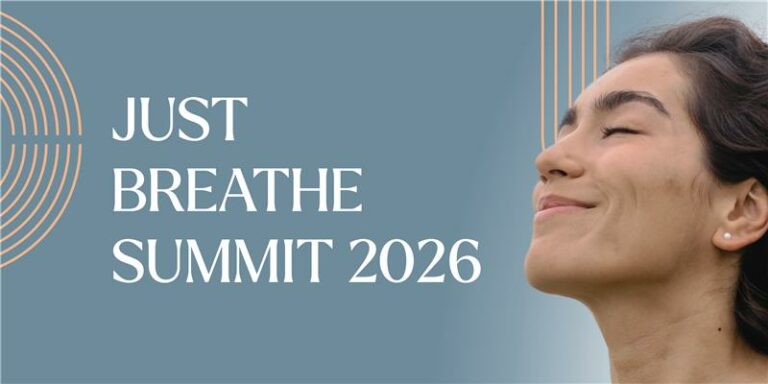
Just Breathe
The most provocative summit yet. Robin Rothenberg opened with a challenge to interrogate physiological aspects of breath. Drs Patricia Gerbarg and Richard Brown presented the science behind the Breath Body Mind program, including a study showing mind-body practice increasing GABA levels in the thalamus, and their work with veterans with treatment-resistant PTSD. Josh spoke with Sri Shubha, daughter of TKV Krishnamacharya, on the connection between chanting and prāṇāyāma.

2025 Summit · 6 CPD points
Yoga for Mental Health
More than six hours of interactive presentations from Australian and international leaders in Yoga Therapy and mental health. Gary Kraftsow presented on duḥkha paramparā, the wheel of action and consequence. Sat Bir Singh Khalsa brought the latest clinical evidence. Dr Lauren Tober explored how depression, anxiety, and trauma present in a yoga class. The program ranged from EMDR integration with Āyurveda to mantra for mental health.

2024 Summit · 6 CPD points
Menopause
The inaugural summit arrived the right moment with public enthusiasm for assistance with perimenopause and menopause. The program brought together perspectives from Āyurveda, physiotherapy, psychology and beyond, covering menopause as a transformational rite of passage, essential considerations for teaching āsana during menopause, hormonal changes demystified, and topics that rarely get airtime in professional settings.
New syllabus
We are releasing a new Yoga Therapy syllabus, an evolution of the standard we last revised in 2019, with the same body of competency and the same close alignment to IAYT, and a stronger emphasis on yogic foundations, a minimum 350 hours of teacher training with 650 hours of Yoga Therapy on top. It is ready to read now, and these are the changes.
- Seven sections that flow in order, from foundations through practicum to professional practice, easy to read.
- Competencies matched to the main curriculum, Becoming a Yoga Professional, where it exists, so Yoga Therapy belongs to the broader framework our Private Health contracts already name.
- Newer evidence and recognition cited, including the 2024 NHMRC review.
- Individualised practice design grounded in traditional principles, lived experience, and scope-appropriate support, distinct from protocolised “therapeutic yoga”.
For providers and teachers
Mind your wording
“Yoga Therapy” names a defined scope of practice and a level of training that general teaching does not reach. Used loosely in advertising it misleads clients, puts vulnerable people at risk, and erodes the standing of qualified therapists.
Similarly, there are a number of grey area terms to be aware of, including “clinical”, “counselling”, and “coaching”. There is an important test for use of these terms. Simply, does the word claim more training or scope than you possess? An example: “clinically informed” points at evidence, while “clinical practice” indicates medical treatment, out of scope for most yoga teachers.
Clear training pathway
Yoga Australia’s educational standards for the training of Yoga Therapists set the benchmark in Australia, grounded in classical wisdom and contemporary health science, and built to honour the breadth of yoga traditions while keeping the rigour the profession requires. The sections run in order.
- Yoga Foundations
- Yoga and the Mind
- Health and Disease, the Yogic Perspective
- Biomedical and Psychological Foundations
- Yoga Therapy Tools and Skills
- Practicum
- Professional Practice
01
Yoga Australia Level 1 registration
A minimum of Level 1 teaching registration, the 350-hour teacher training qualification, or equivalent is the prerequisite, along with two years of regular personal practice.
02
Two years of teaching experience
A minimum of two years of regular yoga teaching, up to one year of which may be concurrent with Yoga Therapy training.
03
650 hours of Yoga Therapy training
A minimum of 650 hours over at least two years in an accredited program, with 500 hours of core curricular learning and a 150-hour practicum completing the total.
04
150 hours of supervised practicum
The practicum covers intake, assessment, session delivery, and therapeutic relationship management under mentorship, building confidence and competence before independent practice.
Reading for Yoga Therapists
Across Yoga Today you will find a growing library of articles on therapeutic yoga that set Yoga Therapy apart from general instruction. These are some of the pieces most relevant to Yoga Therapists and to teachers considering the Yoga Therapy pathway.

The Integrity of Yoga Therapy
Rebel Tucker, with over thirty years working alongside traditional medicine as a naturopath and Yoga Therapist, reflects on the risks of diluting yoga’s depth through shortcuts and under-qualified offerings, and advocates for robust standards, collaboration, and clear scope of practice to protect both clients and the profession.

From Injury to Insight
Robin Rothenberg has been a dedicated Yoga Therapist for nearly forty years and is the current IAYT Board President. Her journey began with chronic pain and autoimmune issues, evolved through Iyengar and Viniyoga traditions, and led to a landmark study showing 78% of participants with low back pain achieving significant pain reduction through Yoga Therapy.
Advancing the Profession
A comprehensive look at Yoga Therapy in Australia and the direction the profession is taking, covering the reinstatement of private health eligibility, the importance of defining Yoga Therapy’s scope of practice, and the case for NDIS accessibility, professional referral pathways, and compliance with national and international standards.

Managing Back Pain with Yoga
One in six Australians reports back pain, making it the leading cause of disability in the country and the most common reason for lost work productivity. Ruth Gent from Dru Yoga offers educational prompts on red flags and referrals, the current research, scope of practice boundaries, and the therapeutic toolkit yoga provides for this pervasive condition.

Mental Health Through the Yogic Lens
An exploration of how classical yoga philosophy and contemporary psychology converge in the understanding and treatment of mental health conditions, examining yoga’s capacity to address the roots of psychological distress through practices grounded in tradition and increasingly supported by clinical research.
Navigating Endometriosis with Yoga
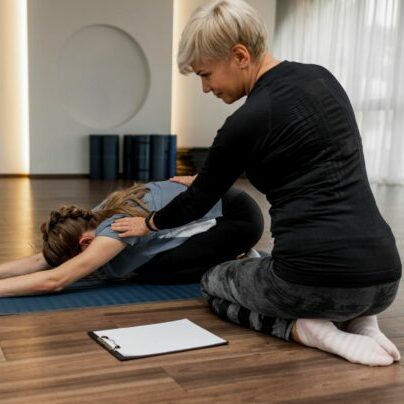
A therapeutic guide for yoga teachers and therapists working with students who live with endometriosis, covering the condition’s impact, the evidence base for yoga as a complementary approach, and the practical considerations for adapting practice to support pain management, nervous system regulation, and quality of life.
Questions we hear often
What is Yoga Therapy?
Yoga is a scientific system of self-investigation, self-transformation, and self-realisation that originated in India, rooted in the Vedas and carried in classical texts and a living oral tradition.
Yoga therapy applies āsana, prāṇāyāma, meditation, mantra, chanting, mudrā, ritual and a disciplined lifestyle in a therapeutic context, to deepen self-awareness and move a client toward their goals. It works to ease the symptoms that cause suffering, improve function, address the underlying causes of illness, and change a person’s relationship to their condition. It draws on its sister science, Āyurveda, and today on contemporary health science and a growing body of research.
What is the difference between a yoga teacher and a Yoga Therapist?
A yoga teacher leads group or individual sessions grounded in the practices and philosophy of yoga. A Yoga Therapist applies those same practices therapeutically, working with individual clients to address specific health conditions, manage symptoms, and support recovery. The distinction lies in the depth of assessment, the individualisation of practice, and the therapeutic framework within which practice takes place. Yoga Therapists undergo specialised training beyond their teaching qualifications, including supervised practicum, biomedical foundations, and therapeutic relationship skills.
How do I become a registered Yoga Therapist with Yoga Australia?
You will need a minimum of Yoga Australia Level 1 teaching registration, which reflects a 350-hour teacher training qualification, along with at least two years of teaching experience, two years of regular personal practice, a current First Aid certificate, and completion of a Yoga Therapy training course of at least 650 hours over a minimum two-year period, including 150 hours of supervised practicum. On completion of a Yoga Australia registered course the application fee is $33 including GST. For courses completed outside the Yoga Australia system the fee is $66 including GST, and the annual registration renewal is $33 including GST.
Can my clients claim private health rebates for Yoga Therapy?
Yoga Therapy qualified members with five years of teaching experience and Yoga Australia registration at Level 2 or above are eligible for the provider recognition pathway, under which clients can claim Yoga Therapy sessions through their private health insurance in the same way they would claim physiotherapy. Provider credentialing is being finalised between Yoga Australia and participating funds through 2026. Visit the private health page for full details and to apply.
What is the Yoga Therapy Committee?
The Yoga Therapy Committee is a group of experienced Yoga Therapy practitioners who volunteer their time and expertise to advance the profession within Yoga Australia. The committee curates the annual summit series, develops educational standards, advises on policy matters relating to Yoga Therapy, and represents the interests of Yoga Therapy qualified members. It is one of the most active and productive committees within the organisation.
Register as a Yoga Therapist
Applications are open to Registered Level 1 Teachers and above.
Staff assess each application to the published standard.
Log in to apply.
