
Like a flame in a windless place
Yoga is Meditation

Ancient Contemplations
The land known as India, straddling the Indus Valley, Himalaya, Tamil Nadu, has promulgated techniques and concepts globally, for eons, to those who occupy, trade, and tour. This dissemination has encouraged communal and self-directed approaches to the nondual state, via techniques often named meditation, for the good of humankind, which is also the self.
Vivekananda at the World’s Parliament of Religions in 1893 started the spread in earnest. In the mid twentieth century meditation was still mysterious, synonymous with the word yoga and the lotus sitting posture, and possibly heretical. Cue TM and The Beatles, exploration of consciousness through psychedelics, and growing academic enthusiasm. That progress firmed through the new millennium toward secular mindfulness, stress reduction, and mental health first aid, now even delivered through smartphone apps. The flourishing aspect of Sanskrit texts was easily misplaced. At the same time, the hot yoga craze tugged popular connotation of the word away from consciousness toward exercise, traditionally a small part of the works.
In 2026, meditation in Australia has narrowed
We see eight-week stress courses and breath awareness through a phone app. These help many people, and they draw on a small part of an inheritance reaching back thousands of years. But the contemplative practices native to India remain a vast inheritance, and ancient texts are increasingly discoverable, along with a range of commentaries and techniques known to scholars, teachers, and students, here and abroad.
Taken as a whole, Vedic metaphysics represent a rich, consistent, and ancient contemplative science, describing the nature of consciousness, mind, self, and physical reality. Its account of meditation is the widest of the Indic contemplative maps, accommodating Buddhist and Śaiva streams comfortably. Over thresholds of time and increasingly subtle epiphany, we all come to a personal epoch of remarkable benefit.

उत्तिष्ठत जाग्रत प्राप्य वरान्निबोधत
Arise! Awake!
And stop not till the Goal is reached

First is seen what looks like a star, then a well-cut sparkling diamond and a bright mirror, thereafter the disc of the full moon, then the circular radiance of gems, the splendour of the noon-day sun, and then a ring of flaming fire.
Maṇḍalabrāhmaṇa Upaniṣad
Proliferation and Withdrawal
Prapañca, proliferation, the spreading out of the world through differentiation. Each distinction only stands because the others stand, so nothing in the swarm is independently real. That is the swarming loop, the spray that goes out, curves back, and feeds the source that fired it.
Opposition cannot defeat the swarm, merely another differentiation, another shot in the dark. Argument, correction, refutation, all of it reinforces. Meditation is nirodha, the withdrawal of reinforcement, and the swarm loses coherence by starvation, by lack of supporting resonance.
Patañjali sequences it as layers dropping away, vitarka, vicāra, ānanda, asmitā, each one a support removed. Sāṃkhya calls the same movement pratiprasava, the return of the guṇas from whence they came.
Māṇḍūkya Upaniṣad 7 · Yoga Sūtra I.2, I.17, IV.34
Preparatory Practices
It’s good to start with the first couple of limbs of yoga, behavioural guidelines, and then move on to the active postural practice. That’s a really good way to prepare for meditation. Physical practice is wonderful. It’s quite material and fairly slow. Plus it has all these other amazing side effects, like physical health and fitness. Handled with that preparatory behavioural training, non-violence and truthfulness, it is simply a very, very intelligent thing to do.
An unravelling occurs when people do this consistently, and it is jarring a lot of the time. Probably needs to be. It’s rarely ever perfectly smooth and linear the whole time. You stop and start. Sometimes those clusters of neuroses are so rigid they have to be broken apart, just as when you break open a joint in the skeleton in your flexibility practices. If it’s been stuck for a while, sometimes unlocking it will feel a bit injurious.
He alone is considered qualified to enquire after the supreme Reality, who has discrimination, detachment, qualities of calmness etc., and a burning desire for liberation.
Vivekacūḍāmaṇi 17
By persistent interruption to existing momentum, thought-streams collapse from lack of support. Gently, gently, the famous “peace from above” shines.
Yoga Tārāvalī 20
By fixing the purified inner-organ upon the Self, which is the Witness and Knowledge Absolute and gradually making it quiet, one should behold the state of fullness of one‘s own Self.
Vivekacūḍāmaṇi 384
When the student is ready, the teacher will appear – but let us also ensure that when the teacher appears, the teaching offered is one the student is truly ready to receive.
Avril Bastiansz, Yoga Australia Registered Teacher
CPD resources

Article
Jarring Things
Unsettling is part of the practice. The tradition expects it and prepares for it.

CPD short course
Trauma-Informed Intake, Consent and Referral
Ethical practice requires teachers to recognise both the scope and the limits of their professional competence.

CPD short course
Understanding Scope of Practice: A Guide for Yoga Teachers
It is important to remember that while these practices can sometimes provide benefits that are physically and psychologically therapeutic, these benefits remain subordinate to yoga’s primary purpose: expansion beyond the physical self, contemplative awareness, and the simultaneous cultivation of calm and focus.

Article
Machinations on Meditation
There is no single direct translation in Sanskrit for the word “meditation”. It’s an umbrella term in English that can refer to many different things, there are dozens of meanings. Some varieties facilitate simple stress reduction, some describe dissolution of personality into the formless void, and others take students on journeys beyond the ordinary through several stages of curious subtlety.
Article
Adhikārī – Rethinking Readiness in Modern Yoga
In the classical traditions of Yoga and Vedānta, readiness was framed by the concept of adhikārī – the qualified student. A person’s readiness determined what teaching they could receive, how it should be transmitted, and the pace at which they could progress.
CPD short course
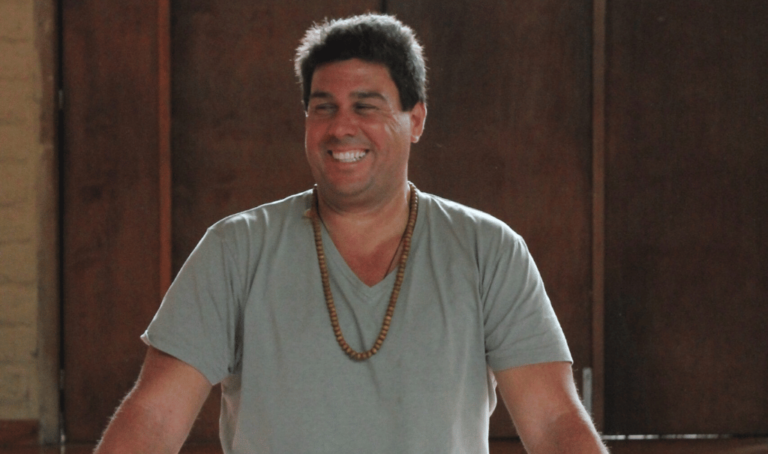
Vedanta Meditation & Philosophy
We will dive into the core tenets of Vedanta and explore how they can assist our awakening, how they fit with and differ from the Yogic path. Key topics covered are Self-Enquiry, The Upanishads, The Mahavakyas, Sadhana Chatushtaya and how they can lead us into the vast ocean of Brahman.
CPD short course
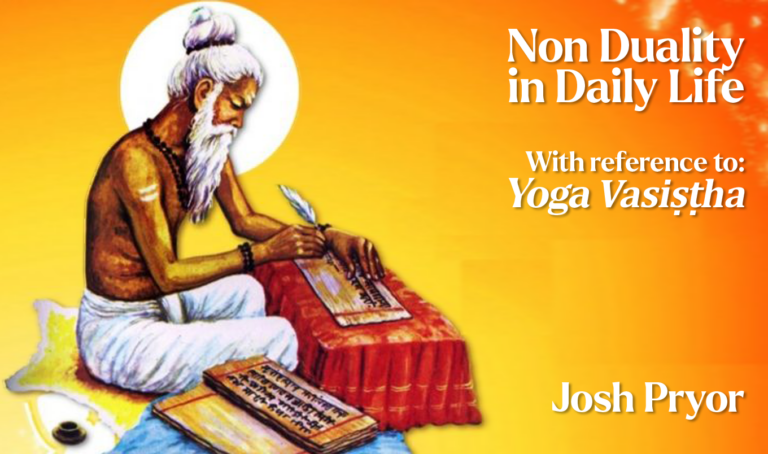
Yoga Vasistha: Non Duality in Daily Life
In this short course Josh moves through a lecture exploring the concept of non-duality with reference to the important yogic text Yoga Vasistha.
CPD short course
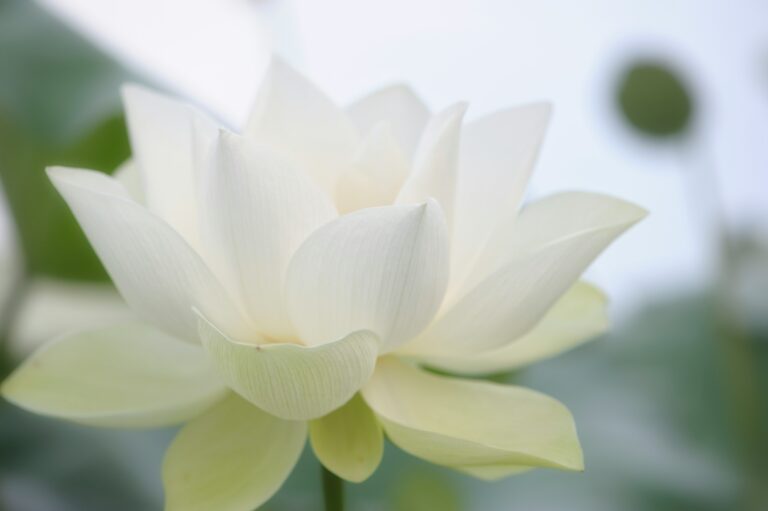
The Way of the White Lotus
Moving beyond traditional techniques like mantras and breath-watching, Malcolm guides you to discover the doorway to pure consciousness that exists within the simplicity of your practice. Through experiential exercises and profound insights drawn from Vedic wisdom and the Bhagavad Gita, you’ll learn to recognise the vast spaciousness of awareness itself, rather than getting caught up in the content of thoughts.
Meditation · Specialisation Standard
Target Level 1
This standard permits teachers to teach meditation as active practice oriented toward enhanced concentration and expanded awareness, informed by an established personal practice and introduced gradually to prepared students.
Scope
Teachers instruct active contemplative practice within a yogic framework, guide sessions in the stream supported by their training and practice, and pace each student’s exposure to subtler practice by observed readiness.
This standard accepts every stream of the contemplative inheritance on equal terms, secular and clinical adaptations included.
This standard excludes treatment of a passive recipient, clinical claims, and any practice involving administered substances.
Conceptual
C3 · Explain the contemplative framework
Curriculum Competency 3 · Yoga Foundations, Level 2 (Override)
Explain non-duality, the centre that every system of contemplative practice approaches. Locate any practice offered as meditation relative to that centre, including current secular and clinical offerings, and when teaching from a stream, draw on its classical sources and name them.
Procedural
C5 · Guide a session
Curriculum Competency 5 · Teaching Methodology, Level 2 (Override)
Open a session, sustain it, and close it well. Place words and silence deliberately, so the analytical mind has a task while the subtler faculties engage.
C6 · Introduce practice gradually
Curriculum Competency 6 · Techniques and Practices, Level 2 (Override)
Incorporate safe technique and sequencing across a course of instruction, and pace each student’s exposure to subtler practice by demonstrated readiness.
C8 · Review teaching and progress
Curriculum Competency 8 · Review Performance, Level 2 (Inherit)
Review teaching with a mentor or colleague, record what was introduced and when, and revise the plan.
Professional
C9 · Respect the power gradient at depth
Curriculum Competency 9 · Ethics, Level 2 (Inherit)
Uphold the Code of Ethics, recognising that influence is subtle at contemplative depth and the duty of care correspondingly high. Name every offering plainly and acknowledge lineage and sources.
C10 · Work within scope and refer
Curriculum Competency 10 · Scope of Practice, Level 2 (Inherit)
Recognise the boundary between instruction in active practice and work reserved to other professions, and refer students past it to medical or mental health practitioners.
C11 · Sustain a personal practice
Curriculum Competency 11 · Personal Practice, Level 2 (Inherit)
Maintain an established daily practice in the stream taught.
Extensions
Read internal states from external signs
Added by this standard (Extend)
Read students’ states from outward signs, settling, effort, agitation, and absorption among them. Adjust guidance in the moment and build the judgement under supervision.
Recognise adverse response and refer
Added by this standard (Extend)
Recognise the early signs of destabilisation, reduce intensity or withdraw the practice, ground students, and refer when recovery needs more than the session gives. Intensity promoted as proof of transformation is a warning sign.
Contraindications and safety
Classical yoga grounds contemplative practice in the progression through the limbs: stability of body and breath precedes subtler work.
Delivery is trauma-aware throughout.
Extra care applies with psychotic and dissociative conditions, severe depression and suicidality, unresolved trauma, and recent bereavement or crisis. Teachers recognise each of these, shorten the practice or withdraw it, and know the referral pathway.
Adverse response includes dissociation, resurfaced traumatic material, prolonged low mood or agitation following intensive practice, and disturbance of perception or identity persisting past the session. Teachers recognise these, ease the practice, and refer.
The conditions and responses listed in this section are drawn from outside the corpus and are flagged for member and clinician review.
Assessment
A short quiz covers contraindications, adverse response, scope, and the framework. Documentary evidence comprises training records, hours, and a statement of personal practice history. Staff review the whole application and may request a conversation. Applicants who have the capability apply on evidence alone, and those without it complete training to this standard.
Indicative training 50 to 150 hours above a 200 hour teacher training, at least half delivered in person, practicum wholly in person. Teachers assessed to this standard are listed in the public teacher directory under meditation, filterable by location.
I am the all-witness, the Ātman of all, the dweller in the caves of all beings.
Tejobindu Upaniṣad
Meditation Teacher Badge
Applications are open to Yoga Australia members.
Log in to apply, or become a member.
