
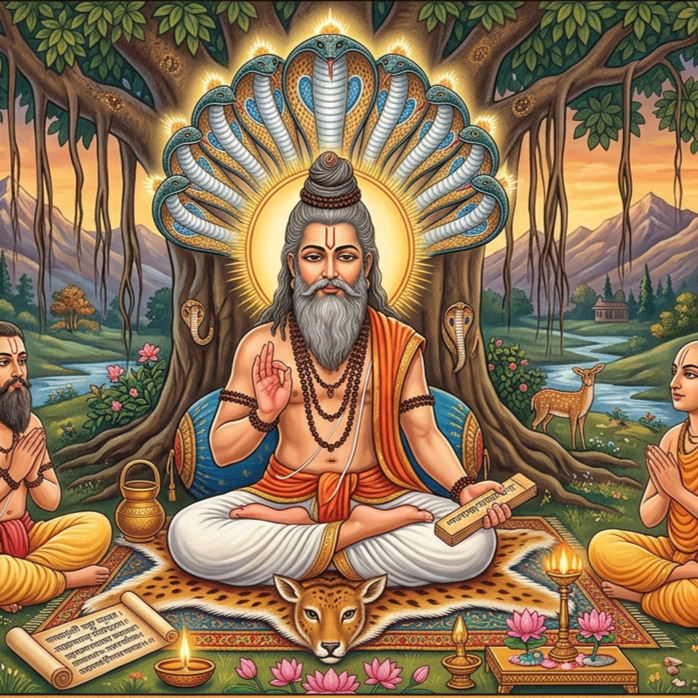
Description
This course invites yoga teachers into a careful and illuminating re-reading of the Yoga Sūtras, not as a standalone or internally uniform text, but as a teaching that both emerges from and departs from the philosophical system of Sāṃkhya.
Working with the sūtras alongside their traditional commentary, we explore Patañjali’s critique of the Sāṃkhya understanding of liberation. While Sāṃkhya locates freedom in discriminative knowledge, Patañjali points beyond this, suggesting that even refined knowledge remains a movement of mind. The course traces this subtle but crucial shift toward a deeper understanding of samādhi as the complete stilling of all mental fluctuations.
We then turn to one of the most intriguing dimensions of the text: the role of Īśvara. By examining how devotion to Īśvara is presented differently across the first two pādas, we uncover a teaching that appears to adapt itself to practitioners of differing temperaments—ranging from contemplative inquiry to devotional orientation.
From here, the course brings a critical lens to Patañjali’s attitude toward the body, highlighting a significant tension between the Yoga Sūtras and the body-positive, movement-oriented yoga culture of today. Rather than dismissing this tension, we explore it as an invitation to greater clarity and honesty in how we understand and teach yoga.
Finally, we widen the lens to consider what unfolds after Patañjali. Drawing on developments in Purāṇic and Tantric traditions, we trace the emergence of paths that embrace the body, affirm householder life, and offer the possibility of liberation within the world. In doing so, we suggest that many features of contemporary yoga may find greater resonance with these later traditions than with the classical model of the Yoga Sūtras itself.
Thoughtful, accessible, and grounded in historical awareness, this course supports yoga teachers in developing a more nuanced relationship with tradition—one that honours its complexity while remaining deeply relevant to modern practice.
The course is taught through a series of nine videos averaging about 15 minutes in length each, with lecture and slides. Notes accompany each video. The course concludes with a questionair to test your understanding.


